How to measure SEO success for business websites – the complete guide
Conclusion: Driving growth by measuring SEO success
Table of Contents
Introduction: Why measuring SEO success matters
Measure SEO success is one of the most important steps in any digital strategy. A website that looks great but doesn’t perform in search results won’t generate business value. According to Google’s SEO starter guide, measuring results is critical for ongoing optimization. Flor-IT ensures SEO is not just implemented but tied to clear metrics that demonstrate growth.
What does it mean to measure SEO success?
SEO success is often misunderstood as simply ranking first on Google. In reality, success is about aligning SEO performance with business goals:
For B2B companies → SEO success may mean more qualified leads.
For e-commerce brands → it could mean increased organic sales.
For local businesses → visibility on maps and local searches is critical.
Flor-IT works with clients to define what SEO success means for them, ensuring reporting is aligned with real objectives.
Key methods to measure SEO success
The most reliable way to measure SEO success is by combining multiple metrics. Core indicators include:
Organic traffic growth – sessions and users from Google.
Keyword visibility – performance for primary and long-tail terms.
Conversion rates from organic search – leads, sign-ups, purchases.
Engagement metrics – bounce rate, dwell time, page depth.
ROI – comparing SEO investment with revenue impact.
A McKinsey study shows that companies who align digital KPIs with financial outcomes see up to 20% higher profitability.
Tools to measure SEO success
Accurate tracking requires the right tools. At Flor-IT, we integrate:
Google Analytics 4 – to track traffic and conversions.
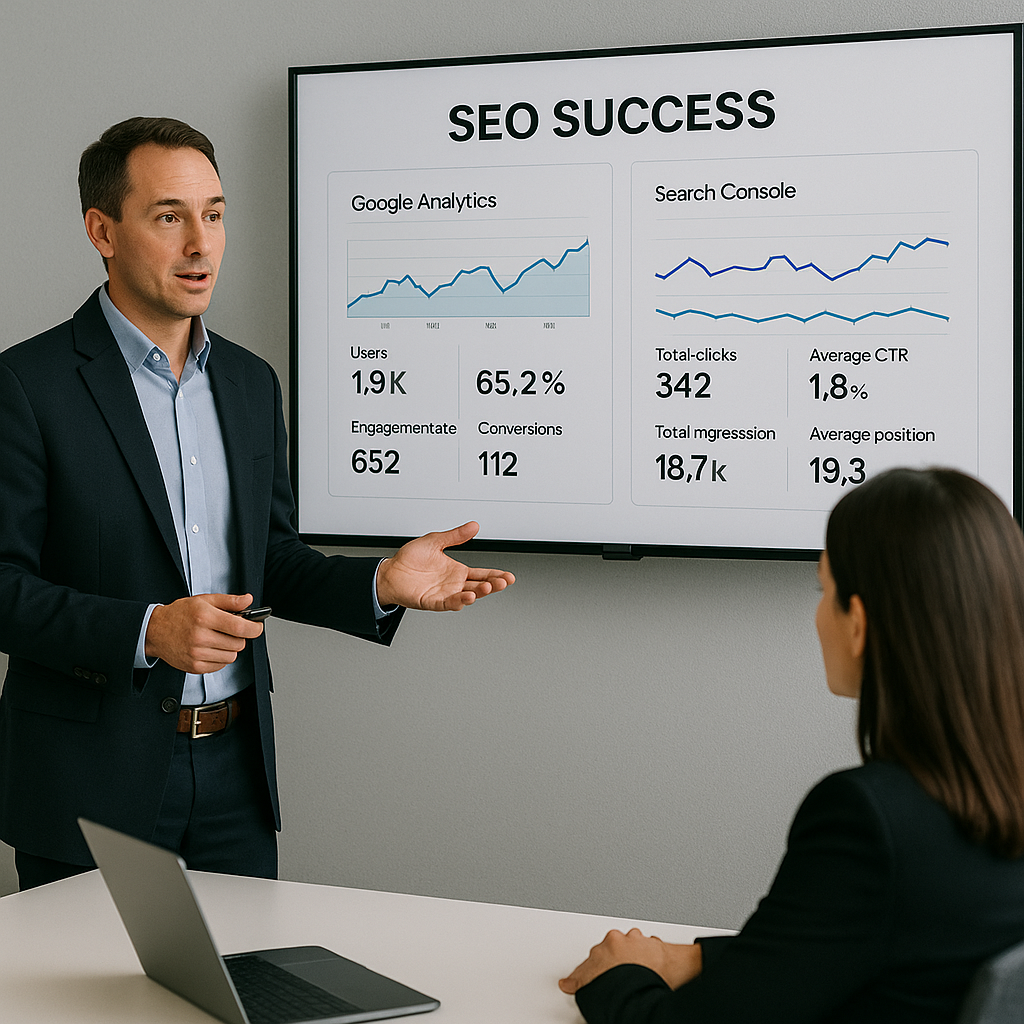
Google Search Console – for impressions, clicks, and ranking data.
SEMrush & Ahrefs – to benchmark against competitors.
Custom dashboards – that combine KPIs into actionable reports.

Flor-IT’s approach to SEO measurement
Measuring SEO success is not just about tools, but about strategy. Flor-IT provides:
Custom KPI definitions tailored to business objectives.
Integration of reviews via Remarqz to boost structured data and click-through rates.
Monthly reporting dashboards with clear recommendations.
Case studies that show real ROI.
Example: for Impact CEE, Flor-IT measured success not only in traffic but also in the 25% increase in qualified leads after implementing SEO improvements.
Common mistakes when measuring SEO success
Many companies struggle to measure SEO success effectively. Common pitfalls include:
Focusing only on rankings instead of business outcomes.
Tracking vanity metrics like impressions without context.
Short-term expectations – SEO results take 3–6 months.
Not connecting SEO to ROI – missing the bigger business picture.
Flor-IT helps clients avoid these mistakes by aligning metrics with growth objectives.
Conclusion: Driving growth by measuring SEO success
Measure SEO success is about moving beyond technical metrics and focusing on business growth. With the right KPIs, tools, and strategy, SEO becomes a measurable growth engine. Flor-IT ensures that success is not defined by guesswork, but by clear, actionable data.